The Two-Pence Ledge: What Blackpool Arcades Still Know About Making Games Hurt So Good
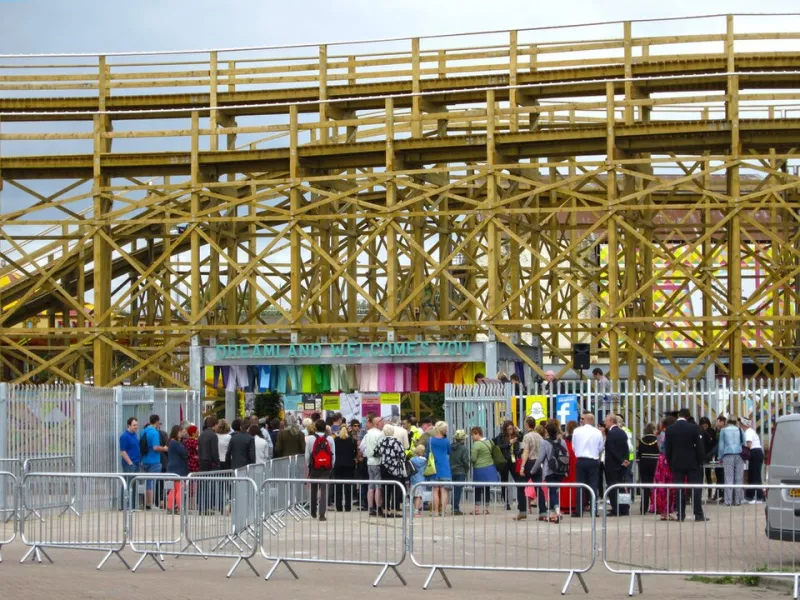
Photo: Oast House Archive , CC BY-SA 2.0, via Wikimedia Commons
There is a specific sound a UK seaside arcade makes. Not the jingle of a modern slot machine, but the clatter of coins cascading down a penny fall, the wheeze of a light-gun cabinet that has seen things, and the low, collective groan when a 2p coin stops dead on the ledge. It is the sound of hope being repeatedly repriced at the lowest possible amount.
Blackpool, Brighton, Southend, Skegness, Cleethorpes — the names change, but the ritual does not. You walk in out of the rain, convert a fiver into copper, and spend the next hour learning lessons that game designers in 2026 are still trying to bottle. The seaside arcade is not a relic. It is a design document written in scratched perspex and stale carpet.
The Cathedral of Almost
The first thing a good arcade teaches you is that atmosphere is not a graphics setting. It is a feeling of permission. The lighting is wrong in exactly the right way. The carpet has a pattern that no sober person would choose. The machines are packed close enough that strangers become witnesses to your failure, which somehow makes the failure more fun.
Modern games spend millions building immersive worlds, then hide players behind matchmaking menus and private lobbies. The arcade understood that other people are the content. A crowd watching you miss a jackpot by half a millimetre is a better story than any cutscene. The social spectacle is the point, not a side effect. That is why a claw machine with a decent queue is more compelling than a perfectly tuned single-player game with nobody to tell about it.
The 2p Philosophy
Here is the core idea: make the stake small enough that losing is funny, but make the near-miss big enough that winning feels like destiny. The 2p machine does not ask for your evening. It asks for your pocket shrapnel. That lowers the barrier to entry to roughly zero, which means everyone plays — kids, grandparents, people who would never call themselves gamers.
The psychology is not subtle. Small repeated losses are easier to swallow than one large one. A cascade of coins is a physical payout you can hear and feel. The variable reward schedule is doing its work, but the arcade wraps it in a seaside postcard. It feels like harmless fun because the numbers are tiny. And mostly it is harmless fun — which is exactly why it works.
Compare that to the modern live-service game that asks for a tenner here, a battle pass there, and a daily login streak to keep the whole thing ticking over. The arcade was doing retention mechanics decades before anyone used the word "engagement". The difference is that the arcade let you walk away with a plastic frog and a story. It did not send you a push notification at 7pm reminding you that your streak was about to expire.
Rigged Claws and the Honest Lie
The claw machine is the most honest dishonest thing in gaming. Everyone knows the claw is weak. Everyone knows the plush is wedged under a metal bar. And yet every single time, a small part of your brain says: this one is different. That is not a bug. That is the entire product.
Game designers call this the illusion of agency, and they deploy it constantly. Loot boxes, pity timers, critical-hit animations, that little sliver of health left on a boss — all of it is the claw machine in a different coat. The trick is to make the player believe their skill matters just enough to keep pulling the lever. The arcade version is more transparent because you can literally see the rig. Somehow that makes it fairer. You know you are being played, but you are being played in public, for 50p, with a stuffed unicorn as the prize.
Modern games could learn from that transparency. When a system feels opaque, players assume the worst. When it feels openly daft — a claw that drops the prize nine times out of ten — they laugh and try again. The line between "rigged" and "cheeky" is mostly about whether the player feels in on the joke.
Near Misses You Can Hear
Arcades are loud because they need you to hear other people almost winning. The clunk of a coin teetering on the edge. The sharp rattle of a payout. The maddening silence of a claw that closes on nothing. Sound is doing enormous narrative work here, and it costs almost nothing.
Think about the last game that made you gasp at a near-miss. A clutch parry, a last-second save, a battle royale finish where you came second. Those moments are engineered. The arcade did it first with a metal ledge and a room full of strangers. The lesson is not about sound design in isolation — it is about designing for the moment before the moment. The anticipation is the product. The payout is just the receipt.
Cabinets Held Together With Tape
There is also a lesson in maintenance. Seaside cabinets are often knackered. The joystick pulls left. The light gun aims somewhere near the screen. The screen itself has a burn-in ghost of a score from 1998. And yet people still play, because the game underneath the wear is legible.
Modern games chase polish to the point of sterility. A little friction can be charming. A wonky cabinet tells a story: this thing has been used, loved, and mildly abused. It feels alive. That is harder to fake than a ray-traced puddle. Studios spend fortunes on "handcrafted" aesthetics while the actual handcraft is sitting in a leaky amusement arcade in Cleethorpes, held together with gaffer tape and hope.
The Ledge Is the Lesson
So what does the 2p philosophy actually teach us in 2026? Make the first step cheap. Let players lose in ways that are funny. Put other people in the room. Make the near-miss audible. Be honest about the rig, or at least be charming about it. And never,ever underestimate the power of a physical ledge.
The seaside arcade is not a museum piece. It is a reminder that games are better when they feel like places you can wander into, waste a bit of time, and leave with a slightly ridiculous story. The claw machine will still be there tomorrow. The 2p will still be stuck on the ledge. And somewhere, a designer will watch a stranger miss by a hair and think: yes. That. That is the feeling.
We just need to stop pretending we invented it.