One More Chorus Before Santa: The Player-Powered Push for a Soundtrack Christmas No.1

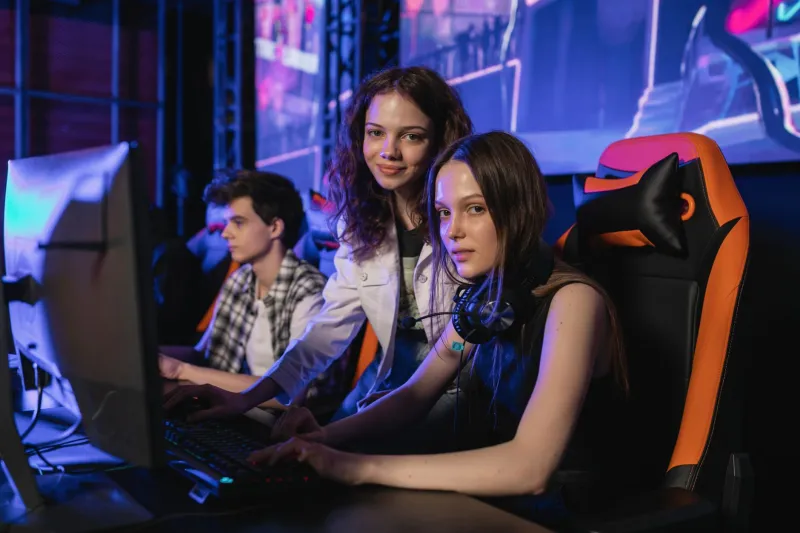
Photo by Photo by The Retro Store on Unsplash on Unsplash
Right, gather round the radiator. The clocks have gone back, the supermarkets are already playing Mariah Carey at you while you're trying to buy a meal deal, and the annual argument about who "deserves" the Christmas number one has started earlier than ever. This year, though, there's a genuinely interesting wrinkle: the most plausible outsider in the race might not be a pop star, a novelty act or a reality TV winner. It might be a piece of game music.
Not a jingle. Not a licensed song that happens to appear in a trailer. An actual soundtrack cut — the sort of thing you've had on in the background while grinding a battle pass or pretending you're going to finish that side quest before bed. The question for 2026 is whether UK players can turn all that affection into a proper chart campaign.
The Chart Doesn't Care About Radio
Let's get the boring bit out of the way, because it's actually the key to the whole thing. The UK singles chart is compiled by the Official Charts Company, and it is built on sales and streams rather than airplay. Radio doesn't count. You can have every breakfast show playing your tune on loop and it won't shift the needle on the chart itself. What matters is paid downloads, physical copies and audio streams, with roughly 100 streams counted as one sale. Video streams are handled separately, and there are rules about how repeat streams are counted, but the broad principle is simple: people choosing to listen and choosing to buy.
That matters because it means a campaign doesn't need a major label plugger or a slot on a big playlist. It needs a lot of people doing the same thing at the same time. Which, if you've ever tried to organise a raid group, you'll know is both the easiest and hardest thing in the world.
Why 2026 Feels Different
Game soundtracks have been edging towards the mainstream for years, but the last few Christmases have shown how quickly a niche obsession can become a proper chart story. Vinyl presses of beloved scores sell out in minutes. TikTok clips of boss themes rack up millions of views. A 15-second loop of something moody and orchestral can do more for a track's visibility than a month of traditional promotion, and the people sharing it aren't necessarily game journalists or hardcore fans — they're just people who liked the tune.
There's also the age thing. A huge chunk of the UK gaming audience grew up with these soundtracks and now has disposable income, a record player and a slightly embarrassing willingness to spend £30 on a coloured vinyl variant. That's not a niche anymore. That's a market.
The Contenders (Probably)
We're not going to pretend we've got a leaked shortlist, because we haven't. But if you're looking at the shape of the race, a few categories stand out.
First, the anniversary pressing. Stardew Valley turns ten in 2026, and its soundtrack has exactly the kind of warm, nostalgic pull that makes people buy physical copies. A coordinated push around a tenth-anniversary vinyl could be genuinely potent, especially if the farming crowd decides it's a laugh.
Second, the TikTok breakout. There's always one track that escapes its game and becomes a sound on everyone's For You page. If a 2026 indie ships with a tune that catches, the chart math gets very interesting very quickly. You don't need a million fans; you need a few hundred thousand people who all stream it in the same week.
Third, the choir cover. This is the wildcard. A school choir or a community group doing a straight-faced arrangement of a battle theme is exactly the sort of thing that gets picked up by local news, then national news, then a breakfast telly slot. It's also the kind of campaign that can appeal to people who've never touched a controller in their lives. That's how you get outside the bubble.
How a Player Push Actually Works
Here's the bit where we have to be grown-ups. Chart campaigns work when they're transparent, legal and a bit self-aware. You buy the track once on a legitimate store. You stream it on a proper service. You don't bot it, you don't loop it silently on 40 tabs, and you don't pretend a Discord server is a marketing agency. The Official Charts Company has rules about manipulated streams, and getting a track disqualified would be the least Christmassy outcome imaginable.
What you can do is organise. Pick a week. Tell people which version to buy. Make it easy. A lot of chart campaigns fail because they're a mess of conflicting instructions — buy this, stream that, no, the other link. Keep it simple and people will actually do it.
And be honest about the odds. A game soundtrack topping the chart is still a long shot. The Christmas number one is a weird beast, and the big labels know exactly how to mobilise their audiences. But "long shot" isn't "impossible", and the beauty of the UK chart is that it has been overturned before by people who simply cared more than the industry expected. Ask Rage Against the Machine in 2009.
The Banter Test
The real reason this is worth talking about isn't whether it actually happens. It's that the conversation itself is fun. A chart campaign gives players something to do together that isn't just another login streak. It's daft, it's communal, and it's a nice antidote to the usual festive arguments about whether Die Hard is a Christmas film.
So if you see a push for a game soundtrack in December, don't roll your eyes. Have a look. Buy a copy if you like it. Stream it if you're curious. And if it all goes wrong and the Christmas number one is another sausage roll anthem, at least we'll have had a laugh trying.
That's the G4DZ take, anyway. Now pass the Quality Street and put the kettle on.